

 Image 1 of 5
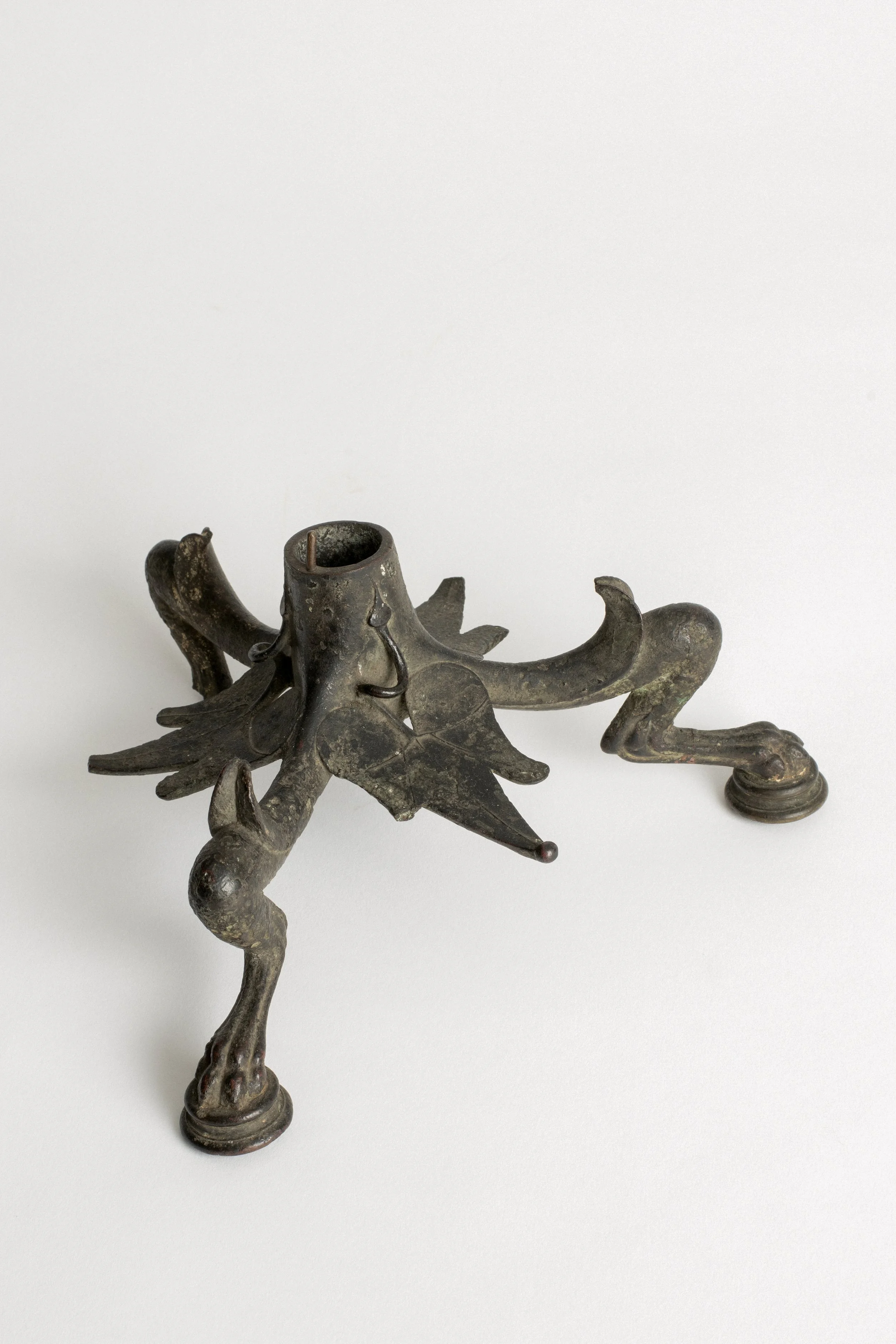 Image 2 of 5
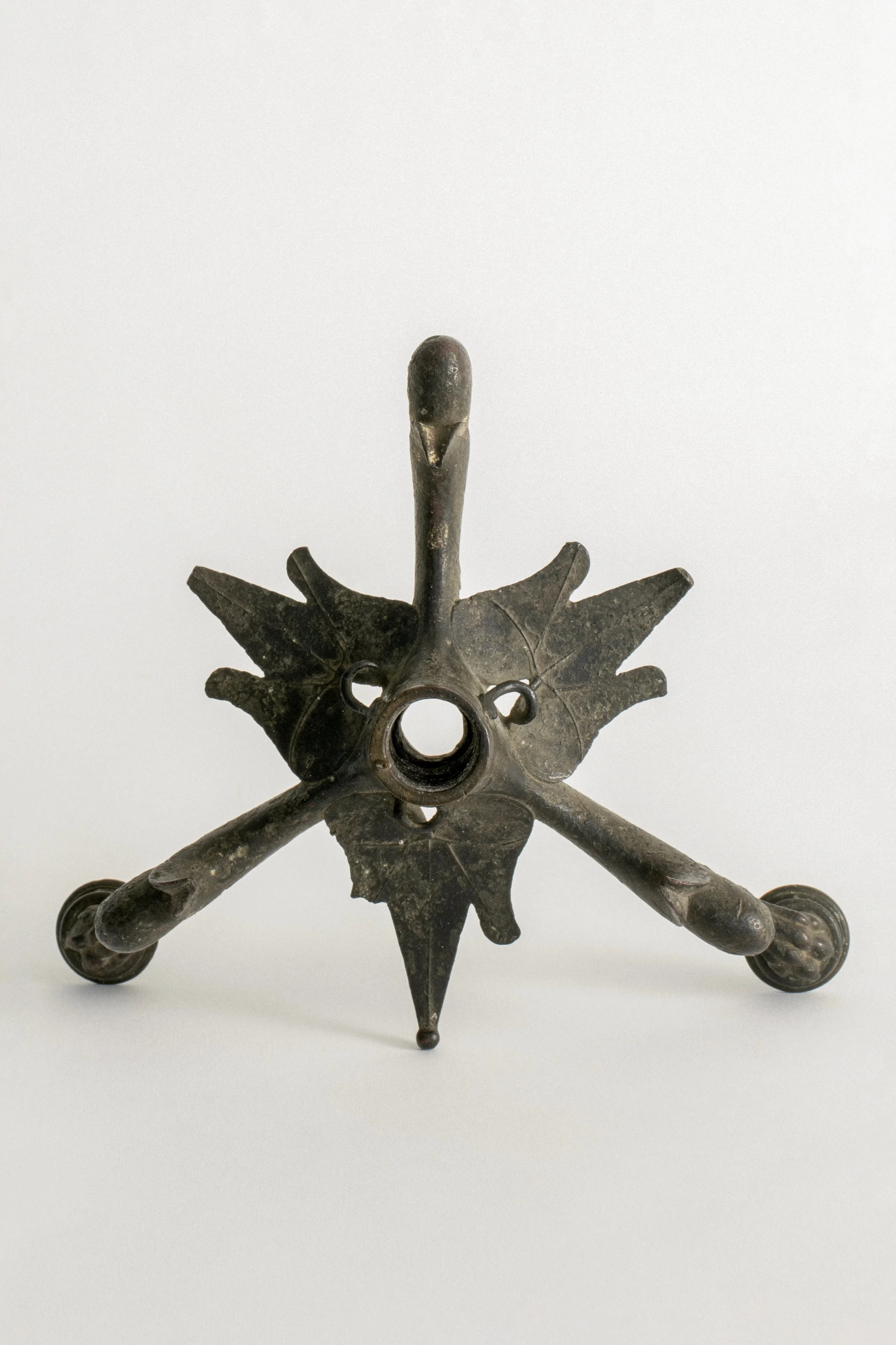 Image 3 of 5
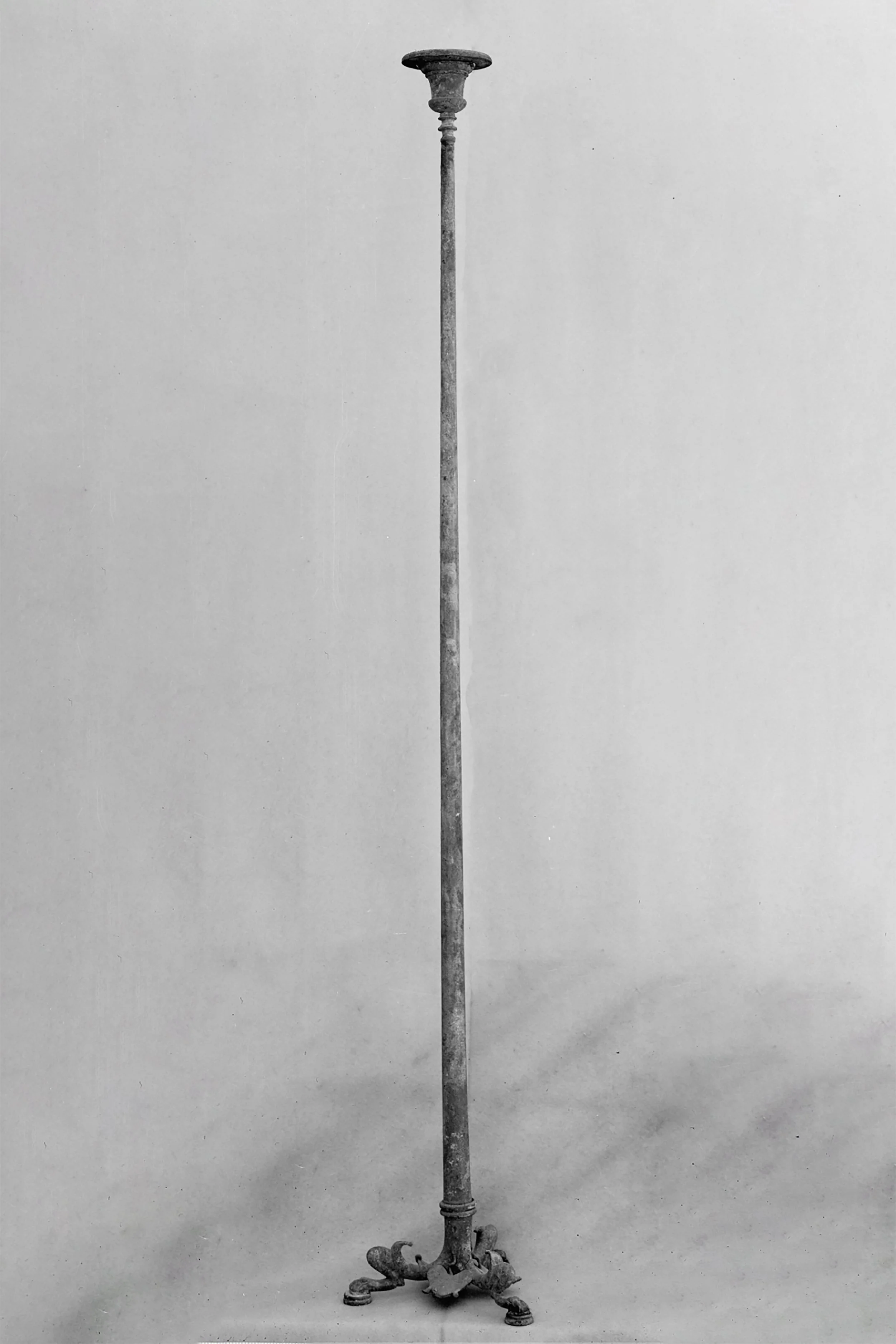 Image 4 of 5
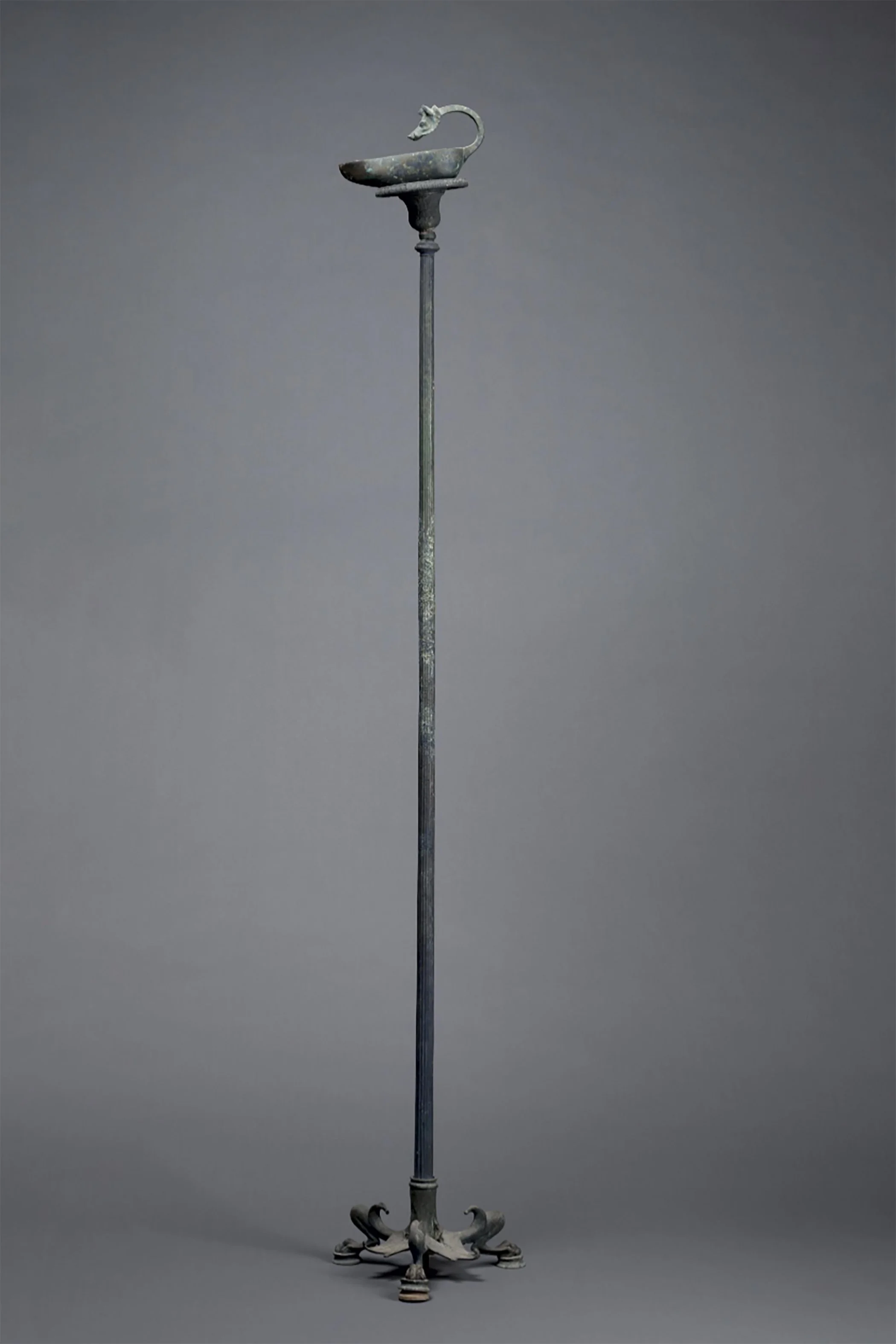 Image 5 of 5
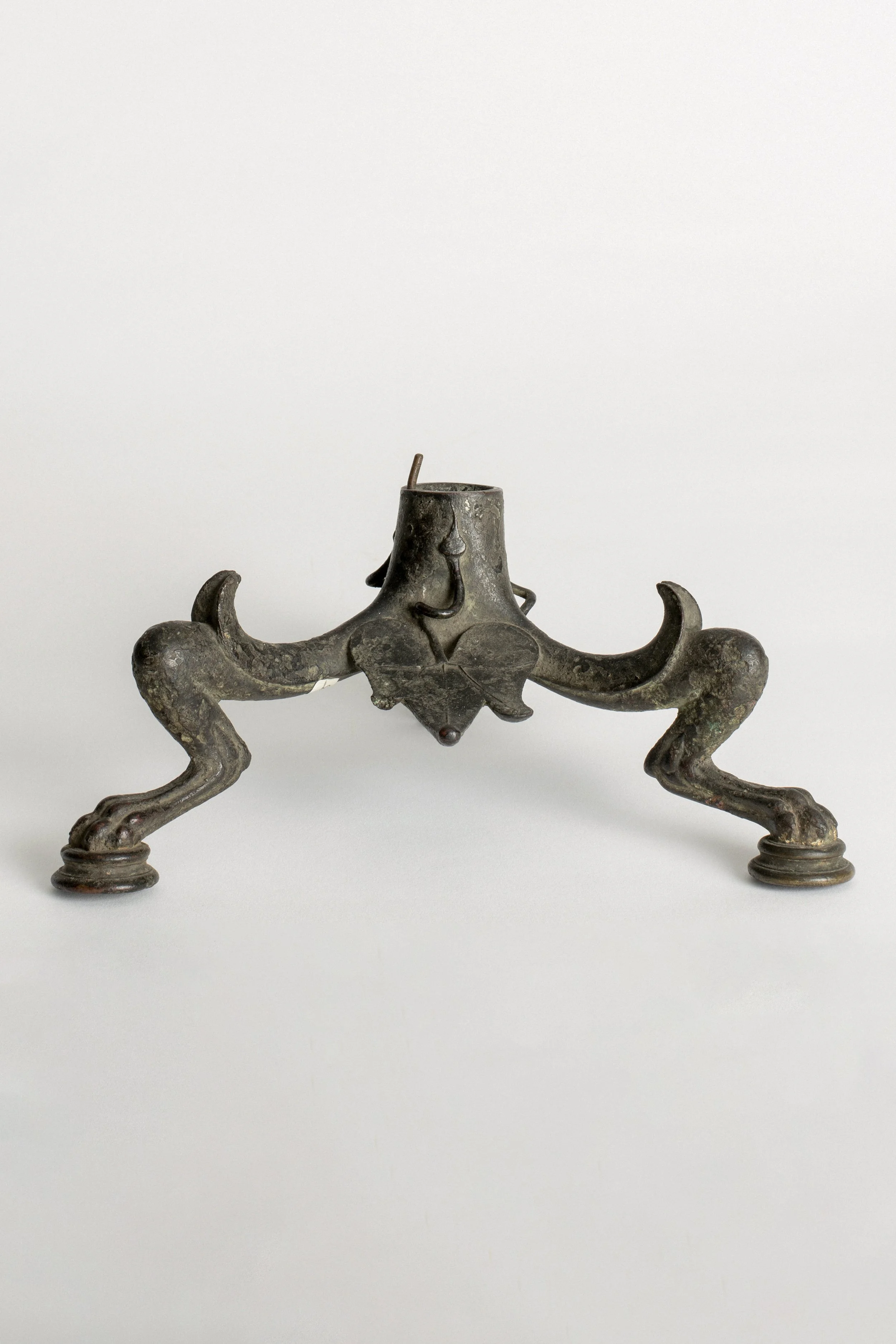
An Early Imperial Roman bronze candelabrum base, Italy, 1st century BCE. Cast in tripod form, composed of three vigorously modeled zoomorphic supports issuing from a central cylindrical socket. The legs depict the bent hindquarters of felines, two retaining their original paw feet raised on concentric circular pads, the third now lost below the knee. Broad naturalistic ivy leaves radiate between the supports, while recurved foliate elements rise toward the central socket. A small retaining pin survives at the rim of the socket, which originally received the tall shaft of the candelabrum.
8.25”W × 8.25”D × 4”H
In Imperial Rome, a candelabrum of this type functioned as a tall lampstand. A long column rose from the tripod base and supported a portable bronze oil lamp above, elevating the flame to cast light across a larger interior.
The form finds a close comparison in a complete Roman bronze candelabrum in The Metropolitan Museum of Art, which also notes that similar examples have been found at Pompeii and other sites buried by the eruption of Mount Vesuvius in 79 CE. A remarkably close comparison is also found in a complete Roman bronze candelabrum in the Cleveland Museum of Art, accession no. 1953.11, dated to 100–1 BCE. See the last image.
Condition: One of the original three lower legs and paw feet is lost from approximately the knee downward. The two surviving paw feet, foliate decoration, and central socket remain substantially intact.
Source: Cleveland Museum of Art, Candelabrum, 100–1 BCE, accession 1953.11.
Cleveland Museum of Art — Candelabrum, accession 1953.11
The Metropolitan Museum of Art. “Bronze candelabrum (lamp stand).” Roman, Early Imperial, ca. 1st century CE. Accession no. 08.258.15.
An Early Imperial Roman bronze candelabrum base, Italy, 1st century BCE. Cast in tripod form, composed of three vigorously modeled zoomorphic supports issuing from a central cylindrical socket. The legs depict the bent hindquarters of felines, two retaining their original paw feet raised on concentric circular pads, the third now lost below the knee. Broad naturalistic ivy leaves radiate between the supports, while recurved foliate elements rise toward the central socket. A small retaining pin survives at the rim of the socket, which originally received the tall shaft of the candelabrum.
8.25”W × 8.25”D × 4”H
In Imperial Rome, a candelabrum of this type functioned as a tall lampstand. A long column rose from the tripod base and supported a portable bronze oil lamp above, elevating the flame to cast light across a larger interior.
The form finds a close comparison in a complete Roman bronze candelabrum in The Metropolitan Museum of Art, which also notes that similar examples have been found at Pompeii and other sites buried by the eruption of Mount Vesuvius in 79 CE. A remarkably close comparison is also found in a complete Roman bronze candelabrum in the Cleveland Museum of Art, accession no. 1953.11, dated to 100–1 BCE. See the last image.
Condition: One of the original three lower legs and paw feet is lost from approximately the knee downward. The two surviving paw feet, foliate decoration, and central socket remain substantially intact.
Source: Cleveland Museum of Art, Candelabrum, 100–1 BCE, accession 1953.11.
Cleveland Museum of Art — Candelabrum, accession 1953.11
The Metropolitan Museum of Art. “Bronze candelabrum (lamp stand).” Roman, Early Imperial, ca. 1st century CE. Accession no. 08.258.15.